Buyers who can answer "how is fleece made" write better specifications and spot problems earlier. This guide walks through the full process, step by step, using 3-end fleece as the worked example. It covers yarn, knitting, dyeing, brushing and inspection, what changes with recycled yarn, and how each choice shows up in GSM, handfeel and price. For the definition and specification of the fabric itself, start with our guide to what 3-end fleece is.
Key takeaways
- How is fleece made in practice? In five main stages: yarn, knitting, dyeing, brushing and finishing, then inspection and packing.
- The knitting stage sets the construction. A 3 end fleece uses a face yarn, a binding yarn and a thicker fleece yarn.
- Brushing is what turns loops into pile. Leaving the loops unbrushed gives French terry.
- Recycled yarn follows the same route but needs extra care in yarn planning and shade control.
- Fawtex lead times: sampling 10 to 14 days, commercial 18 to 22 days, enterprise 25 to 35 days.
How is fleece made? The short version
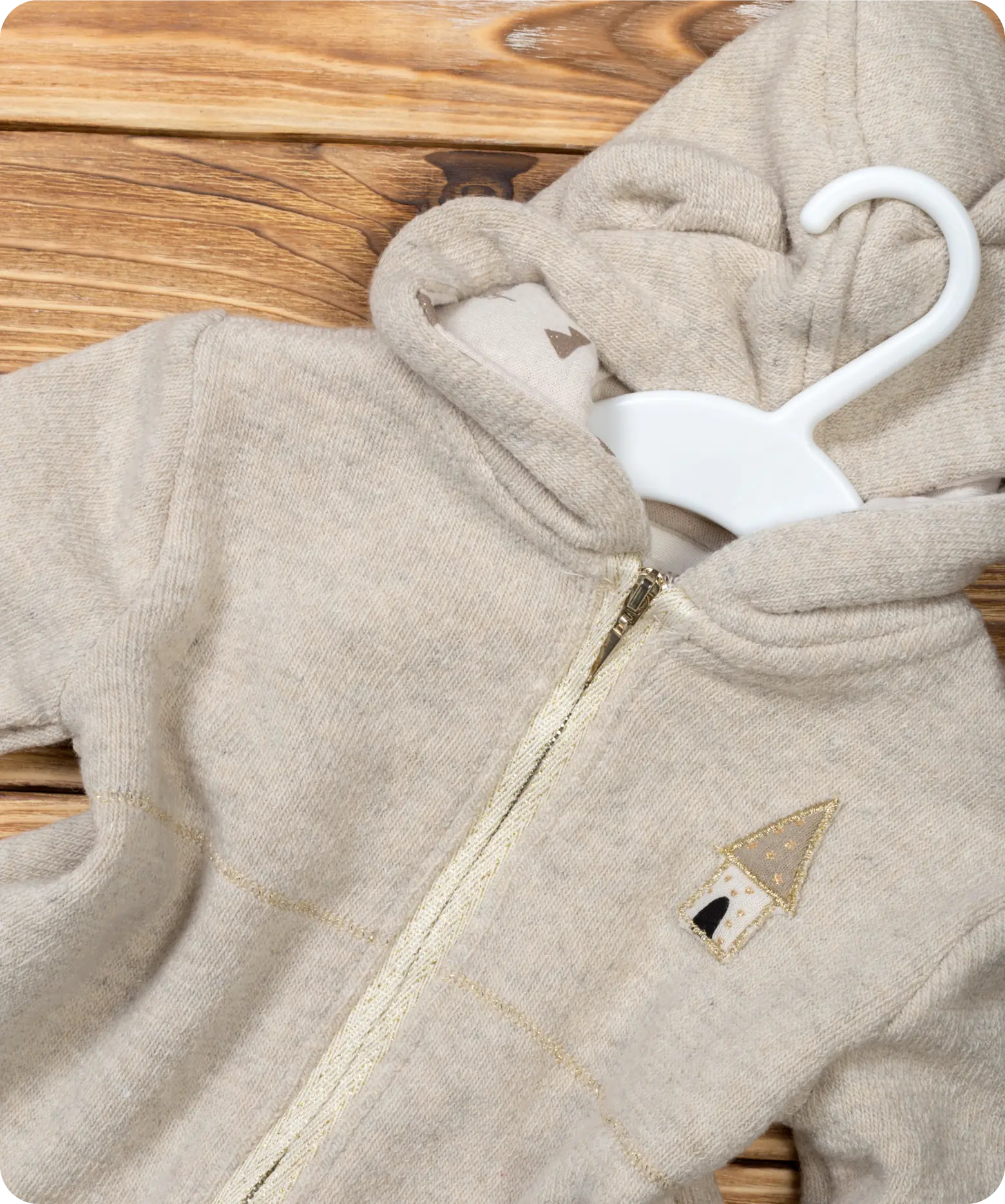
When people ask how is fleece made, the answer depends on which fleece they mean, so define it first. Polar fleece is usually made from polyester and brushed on both sides. Sweatshirt fleece, also called sweat fleece or brushed-back fleece, is a loop-backed knit brushed on one side, and it can be cotton, polyester or a blend. Fawtex's 2-end and 3-end fleece belong to the second group, with cotton and polyester blends and filament options.
| Stage | What happens | What it affects |
|---|---|---|
| 1. Yarn | Fibre is spun into the yarns used for face, binding and fleece | Strength, handfeel, pilling, recycled content |
| 2. Knitting | Circular machines knit the loop-backed structure | Construction, GSM, stretch |
| 3. Dyeing | Fabric is dyed to the approved colour | Shade, colourfastness, shrinkage |
| 4. Brushing and finishing | The back is brushed, and other finishes applied | Pile, warmth, softness, final weight |
| 5. Inspection and packing | Rolls are checked, rolled and packed | Defects, shade between rolls, delivery condition |
That is the short answer to "how is fleece made", and the sections below take each stage in turn. This is the general route. The order of some steps can vary with the finish, and which stages a mill runs in-house, rather than subcontracts, differs between mills. Ask your supplier which stages it controls.
Step 1: fibre and yarn
Virgin and recycled fibre
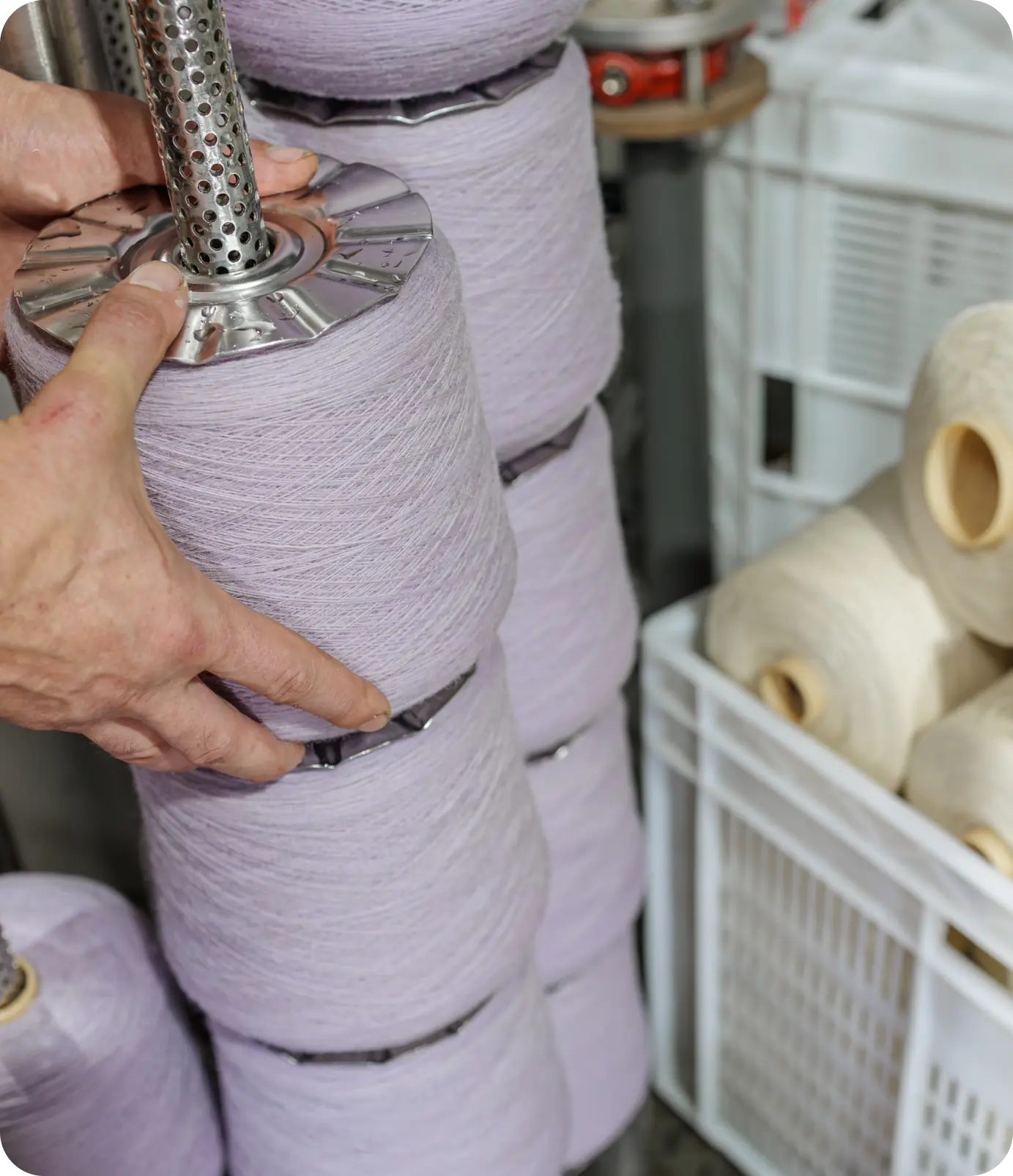
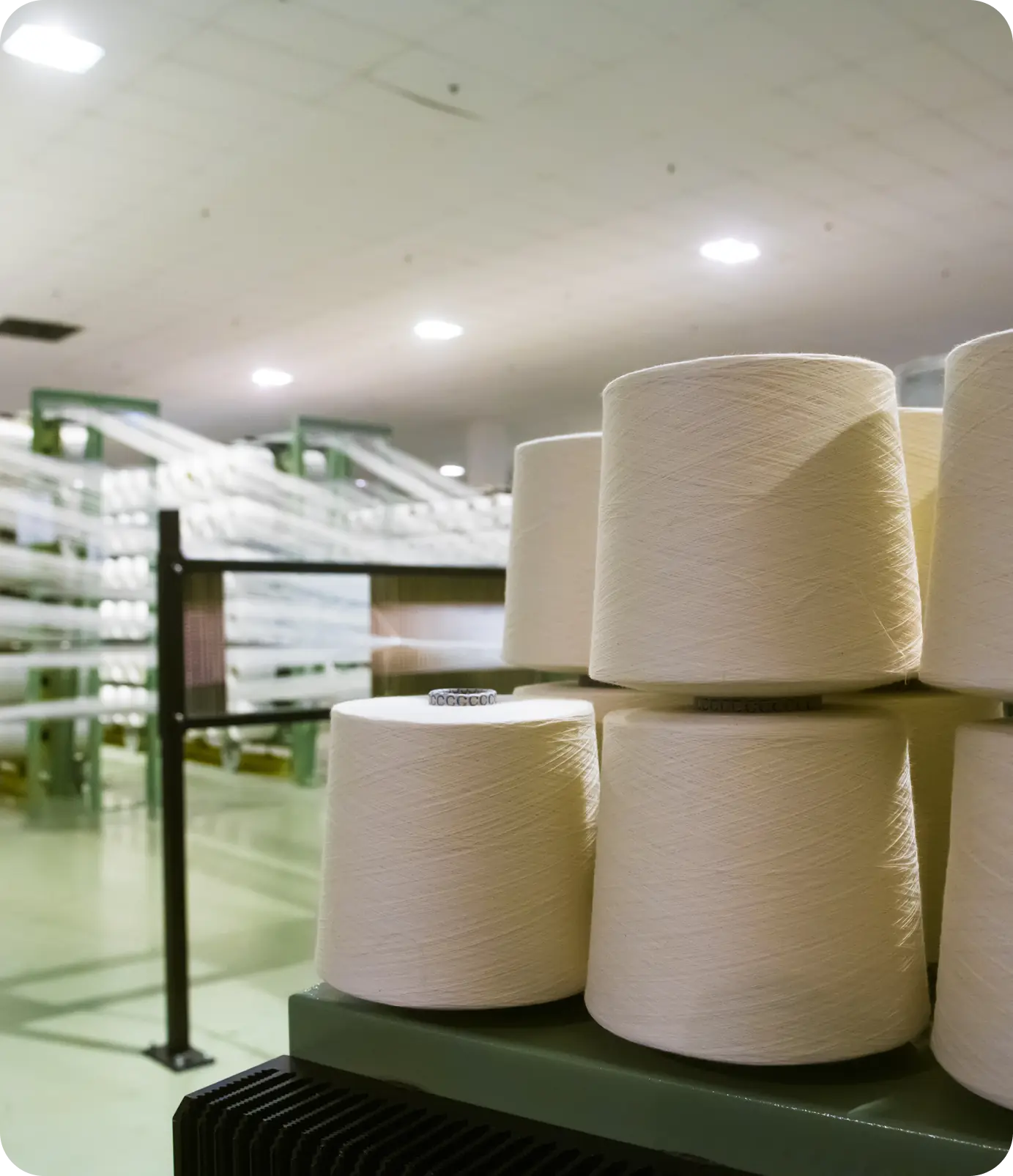
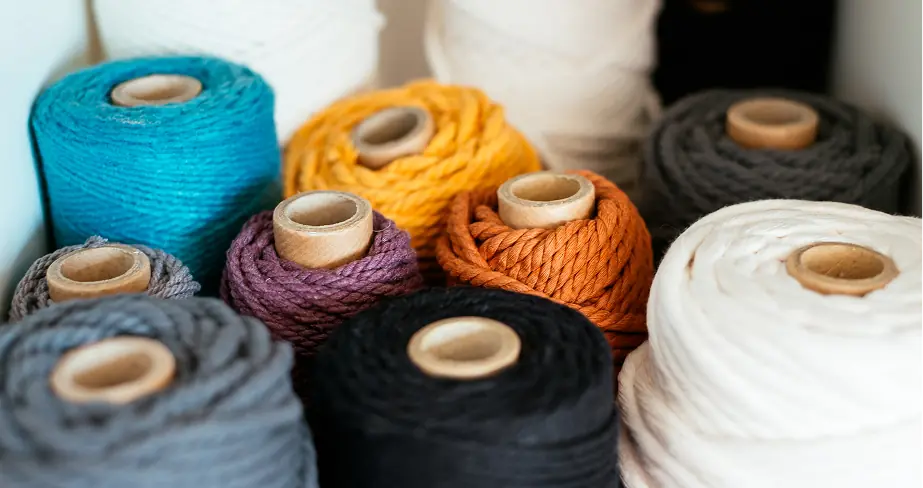
Everything begins with fibre: cotton, polyester or a blend. Yarn spinners turn it into yarns with a defined count and twist. In the 3-end range, Fawtex lists 20s CVC 55/45, 12s CVC 70/30 and 75D/24F filament. A lower cotton count number means a thicker yarn, which is why a coarse yarn such as 12s suits the bulky fleece layer.
How recycled yarn is made
Recycled yarn can come from several routes. One is mechanical recycling of sorted textile material: fabric clips are sorted by fibre and colour, opened back into fibres, blended, carded and spun into yarn. Fawtex's recycled materials page lists recycled textile clips such as black PC and denim. Depending on the mill, the stages from clip to yarn may be done in-house or by partners, and which stages Fawtex runs itself should be confirmed rather than assumed.
Step 2: how is fleece made on circular machines?
Fleece is knitted on circular knitting machines, which produce a tube of fabric, and this is where the structure is fixed. Each course of the fabric is built from yarns fed into the knitting needles by feeders. For circular knitting fleece, the machine is set up so one side forms a smooth face while the other carries loops of the thicker fleece yarn.
2-end vs 3-end at the machine
In a 2-end fleece, two yarns build the structure: a face yarn and a loop yarn. In 3 end fleece, a third binding yarn ties the fleece yarn into the face. That extra yarn is why 3-end fleece is heavier and more stable, with Fawtex listing 300 to 420+ GSM against 240 to 320 GSM for 2-end. The loop length and the machine settings, as much as the yarn, decide the final GSM.
Step 3: dyeing
In many mills the knitted fabric is dyed before brushing, in wet processing machines that suit knitted tubes or open-width fabric. Cotton and polyester respond to different dyes, so blends need a dyeing route that colours both fibres. Dyeing also relaxes the fabric, which is where much of the shrinkage and weight change occurs. Before bulk dyeing, the colour is approved through a lab dip; our guide to lab dip approval for fleece fabric explains the process.
Step 4: brushing and finishing
The brushing process turns the loop back into fleece, and it is the stage that gives the fabric its softness and warmth. The fabric passes over rollers covered with fine wire or similar card clothing, which lift fibres from the loops into a soft pile. The level of brushing sets the handfeel, the warmth and the pilling risk, so it is approved on a sample.
- Brushed fleece: loops are raised into a pile on the back.
- French terry loop: the loops are left unbrushed.
- Peach finish: the face is lightly sanded for a soft, sueded handle.
- Heat setting and compacting: commonly used to stabilise width, weight and shrinkage, depending on the mill.
For a full comparison of the unbrushed and brushed results, read 3-end fleece vs French terry. The effect of heavy brushing on surface wear is covered in our guide to fleece pilling.
Step 5: inspection and packing
Finished fabric is inspected on the roll for defects, width, weight and shade consistency. Faults are marked or recorded, rolls are labelled and packed to protect them during shipping. Ask your supplier for a roll-level packing list so you can trace issues to a specific roll.
How is fleece made with recycled yarn, and what changes?
The route is the same, but three points need more care. First, yarn planning: recycled fibres can be shorter, so the blend and twist must be chosen to give adequate strength. Second, shade: base colour can vary between lots, so colour approval and lot control matter. Third, documentation: if you plan to claim recycled content, you need the supplier's evidence. Fawtex makes recycled yarn commercially practical in its fleece, and recycled content can be specified against your requirement.
Common fleece defects that start in the process
Once you can answer "how is fleece made", most fabric faults can be traced to a stage in the route, which helps when you write a quality clause:
- Streaks or barre: often linked to yarn variation or uneven tension at knitting.
- Needle lines or holes: knitting faults, caught at roll inspection.
- Uneven pile or patchy handfeel: inconsistent brushing.
- Shade difference between rolls: dyeing or lot variation.
- Weight or width variation: knitting settings, relaxation and finishing.
How process choices show up in GSM, handfeel and price
| Process choice | GSM | Handfeel | Cost effect |
|---|---|---|---|
| Coarser fleece yarn | Raises weight | Fuller, plusher | More yarn per square metre |
| Third (binding) yarn | Raises weight and stability | Firmer, more substantial | More yarn and knitting effort |
| Heavier brushing | Can lower surface weight slightly | Softer, loftier | Extra finishing and more pilling risk |
| Peach finish | Little change | Soft, sueded face | Extra finishing step |
| Recycled yarn | Depends on the plan | Can differ slightly | Depends on feedstock and documents |
Fawtex does not publish a price list, because quotes are built around your spec. See the pricing page, and our fleece fabric GSM guide to choose a target weight.
Production lead times
Typical Fawtex lead times are 10 to 14 days for sampling (300 to 1,000 kg), 18 to 22 days for commercial orders (1,000 to 5,000 kg) and 25 to 35 days for enterprise orders (5,000 to 20,000+ kg FCL). Confirm timing against your colour count and finish when you receive the quote, and add shipping time.
Frequently asked questions about how fleece is made
How is fleece fabric made?
Fibre is spun into yarn, the yarn is knitted on circular machines into a loop-backed fabric, the fabric is dyed, and the back is brushed to raise a pile. It is then inspected and packed. The yarns, the loop length and the brushing level decide the final weight and handfeel.
Is fleece always polyester?
No. Polar fleece is usually polyester, but sweatshirt fleece can be cotton, polyester or a blend. Fawtex lists cotton and polyester blends, such as CVC 55/45 and 70/30, as well as a filament option, so always check the composition in the spec.
What is the difference between brushed and unbrushed fleece?
Brushed fleece has its loop back raised into a pile, which feels softer and warmer. Unbrushed fabric keeps the loops and is sold as French terry. The knit can be the same, and the finishing step decides which result you get.
How long does fleece production take?
At Fawtex, typical lead times are 10 to 14 days for sampling, 18 to 22 days for commercial orders and 25 to 35 days for enterprise orders. Confirm against your colours and finish, and add ocean transit to your destination.
Can fleece be made from recycled yarn?
Yes. Recycled yarn follows the same knitting, dyeing and brushing route as virgin yarn, though yarn planning, shade control and documentation need extra attention. Tell the supplier the recycled share and the proof you need when you request a quote, because the answer to "how is fleece made" from recycled yarn depends on the feedstock.
What machines knit fleece?
Fleece is knitted on circular knitting machines set up with feeders for the face, binding and fleece yarns. Brushing is done afterwards on separate machines with wire-covered rollers. Ask your supplier which of these stages it runs in-house and which it subcontracts.
Related guides: What is 3-end fleece? | 3-end fleece vs French terry | Fleece fabric GSM guide | Recycled-yarn fleece for garment manufacturers